


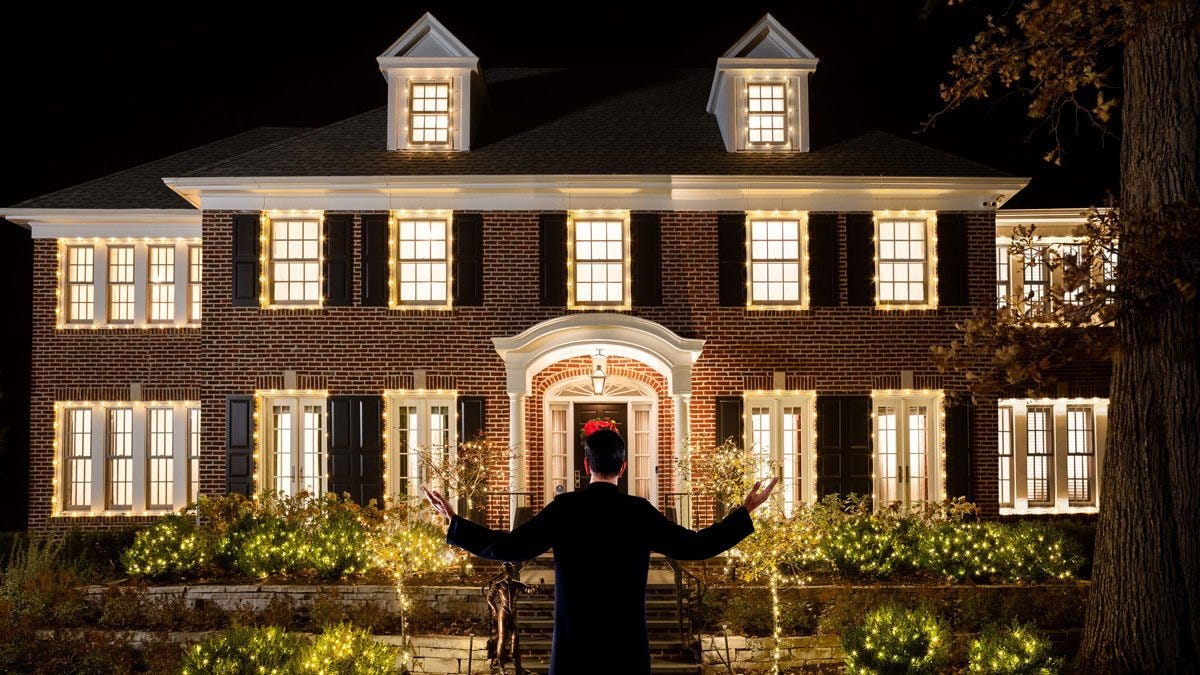
In August 2001, I wrote an article, “Home Alone in the Priesthood,” that was published in America magazine. My thesis was that as more diocesan priests find themselves living alone, pastoring one or more parishes, both bishops and the laity need to provide more support than was offered in the past when two, and sometimes three, priests lived together in rectories. I identified various consequences that result from priests living alone, including retention problems, an increase in health and disciplinary problems, requests for early retirement, etc. Looking back at my article twenty-five years later, I have to say that I agree with 90% of what I wrote, and that almost everything I predicted has come to pass.
While an October 14, 2025, “National Study of Catholic Priests,” provided data that supported many of my earlier findings, the recent study did not adequately explain “Why Are So Many Young Priests Leaving Ministry?” Even though the study identified “burnout” and “loneliness” as factors contributing to the exodus, it did not provide concrete recommendations that might arrest the problem, nor did it address critical differences between homosexual and heterosexual clergy, which have greatly impacted the recruitment and retention of straight candidates and priests.
When I look back and attempt to analyze why I remained in ministry when others with whom I was ordained left, I think of all the families who loved and welcomed me into their homes. When Christmas arrived, and I was invited to parishioners’ homes for dinner, it was not unusual to find a gift waiting for me around their Christmas tree. When I became a supervisory chaplain and traveled to different bases around the world, I was often invited to celebrate Sunday Mass. In doing so, I would always remind the Catholic congregants of the basic human need their Catholic Chaplain had for loving and being loved. As I wrote in “Home Alone in the Priesthood,”
When a woman from a base complained about the Catholic chaplain who left the military to marry, I asked her what she had done to let the chaplain know that he was loved. With the belief that celibacy works both ways, I inquired if she ever invited the priest over for dinner or sent him a card on his birthday or at Christmas. If her husband did not show his gratitude in tangible ways, especially on special occasions, might she be moved to question whether her husband really loved her? Why should one be surprised if some priests question the love of their parishioners or leave active ministry when their many acts of service often go unacknowledged?
Many Catholic families today fail to recognize how straight priests need more love from them than many homosexual priests who often prefer and enjoy the fraternal support of fellow gay priests, not to mention their closeted homosexual bishop. When I worked on weekends as a contract chaplain for a military community in the Italian port of Gaeta, Italy, I was invited by a family to stay at their home instead of aboard ship. Fifty years later, I am still in touch with that family. When a closeted homosexual Catholic chaplain celebrated Mass at a Marine Corps base in Okinawa, he didn’t interact with the families, but invited a young Marine to his quarters where he took sexual advantage of him. Within a month, the priest received an other-than-honorable discharge. He was just one of many homosexual chaplains I referenced in my America article when I wrote:
While priests comprised about 20 percent of the chaplains [in the Marine Corps], they accounted for about 50 percent of the serious offenses….while a relatively small percentage of married Protestant chaplains got into trouble as a result of adulterous behavior punishable under the Uniform Code of Military Justice, a much larger percentage of priests were imprisoned or separated as a result of homosexual conduct.
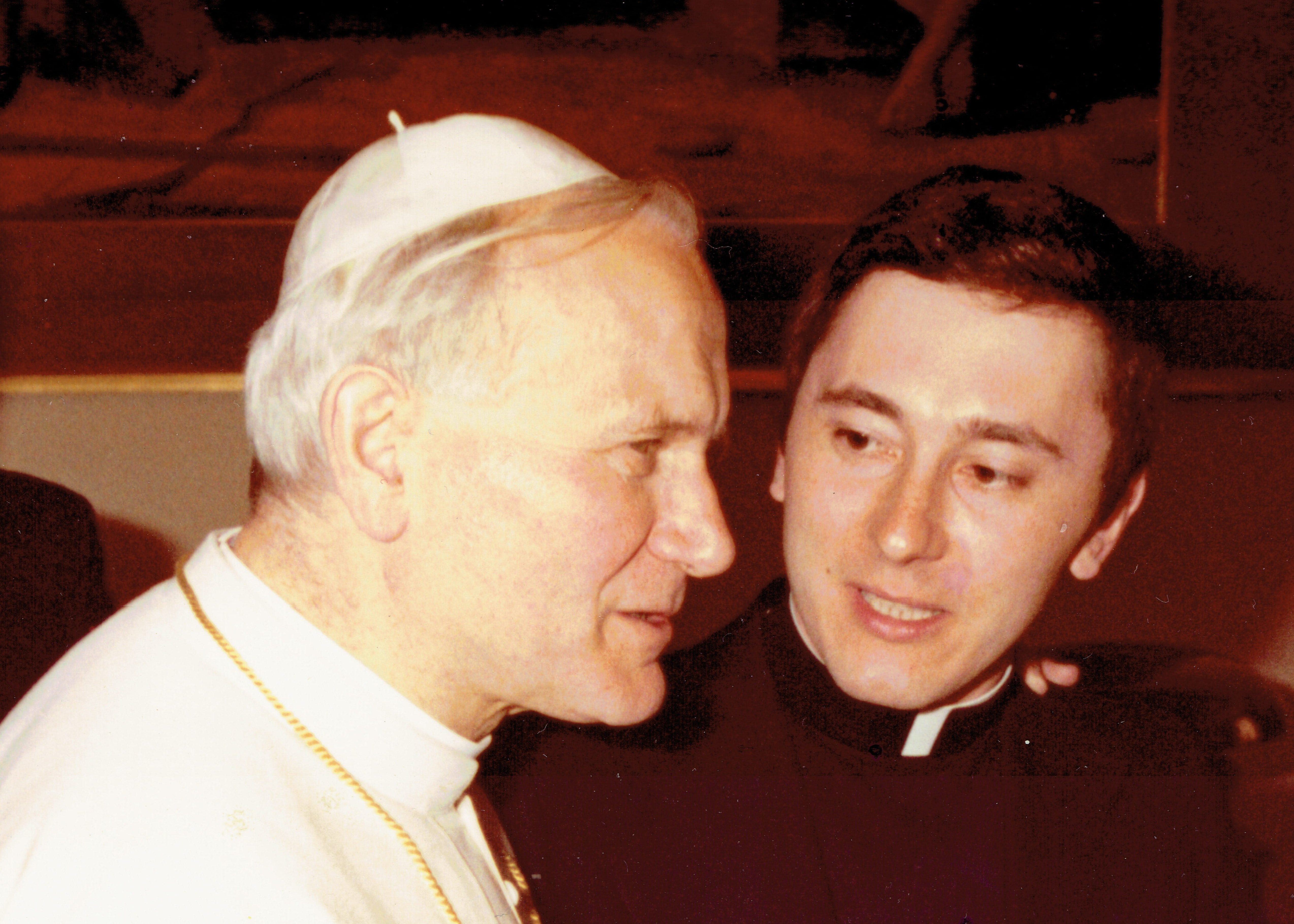
Unfortunately, most heterosexual priests today receive very little support from their bishops who in over 80 percent of the cases are homosexuals. Whenever I was on leave or liberty in Rome, I would often concelebrate morning Mass with Pope John Paul II. He enjoyed my company along with that of many families he had come to know before and after his papal election. On one occasion, in March 1981, when he invited me for dinner and to stay over in the Papal Palace, I regretted that I had to return to my ship in Naples, and I told him I would take a “rain check.” When events in Lebanon prevented my anticipated return to Rome on May 13, 1981, it was that very day that John Paul was shot in St. Peter’s Square. I, along with many heterosexual priests and families, felt very supported and loved by St. John Paul II.
While Pope Francis lived and dined with Monsignor Battista Ricca, Cardinal “Tucho” Fernández, and other outed homosexual priest friends in the Casa Santa Marta, Pope Leo invited priest friends, particularly fellow Augustinians, to live with him in the renovated papal apartments in the Apostolic Palace. Neither of these popes is known for inviting visiting straight priests to join them for Mass, dinner, or to stay as overnight guests. When this same lack of support and affirmation for straight priests is found in most dioceses today, one should not be surprised that most of the priests who are leaving are hetrerosexuals, while most of those who are staying are homosexuals, even if they are known to have engaged in homosexual relations like many gay clerics I identified in “Homosexual Clergy Destroy Heterosexual Vocations.”
One final unreported negative consequence of a Church populated mainly by homosexual clergy is the inability of healthy, loving, straight priests to mentor and interact with minors due to restrictions placed on their ministry in response to the sexual abuse of mainly young men and boys. When I was a young priest, I could take different groups of altar boys camping overnight without anyone questioning my intentions. Today, a young priest can’t even take altarboys out for breakfast after morning Mass unless he is accompanied by an adult parishioner. If I didn’t have that healthy, loving, interaction with young people as a young priest, I wonder if I would have left and married as many young priests are reportedly doing today.
If parishioners have a homosexual pastor who is not inclined to visit them in their homes and interact with them like heterosexual clergy might appreciate doing, what might happen if the gay pastor is followed by a young, celibate, straight priest? Will the parishioners assume that their new priest is as anti-social as their previous pastor? If so, might their failure to extend hospitality result in their new pastor feeling isolated, lonely, and unloved?
Catholics need to accept the fact that there are major psychological differences between heterosexual clergy who are in the minority today, and homosexual bishops and priests whose existence many Catholics don’t even want to acknowledge. Because straight priests cannot often count on support from their bishop or fellow priests, the majority of whom are homosexuals, the laity, through their hospitality and generosity at Christmas and throughout the year, must act decisively before the Church loses more priests who have generously answered Christ’s call, “Come follow me.”
During Christmas, families gather and celebrate that “the Word became flesh” in Jesus, who said, “When you see me, you see the Father.” Just as Jesus is one with the Father, so too are priests, who are addressed as “Father,” called to be one with Jesus by acting in persona Christi. Will your “Father” who baptized your children, witnessed your marriages, heard your confessions, buried your loved ones, etc., be “home alone” after all the Masses are celebrated this Christmas? When Catholics, especially those who insist that their priests be celibate, open up their Christmas presents, what presents will their “Father” be unwrapping?

As Christmas draws near, we are asked to be generous in sharing our blessings with others. If you truly appreciate my research and writings, please contribute to the “Save Our Seminarians” Fund that will help safeguard young men from becoming victims of homosexual predation in U.S. Catholic seminaries.
Gene Thomas Gomulka is a sexual abuse victims’ advocate, investigative reporter, author, and screenwriter. A former Navy (O6) Captain/Chaplain, seminary instructor, and diocesan Respect Life Director, Gomulka was ordained a priest for the Altoona-Johnstown diocese and later made a Prelate of Honor (Monsignor) by St. John Paul II. Email him at msgr.investigations@gmail.com.
Harsh reality, which needs correction. Thanks for sharing these insights.
I'm a married woman with children who seriously struggles with the idea of inviting priests into my home because--
1.) I was sexually assaulted by a priest in college, as were two other women my age. I'd known the priest for three years, and he had won our (my and my friends') trust because he was constantly around us as our chaplain. It was hugely destructive-- many of those friends are no longer in the Church, and those that are (other than me) aren't willing to really discuss or recognize what happened.
2.) My mother was sexually harassed by a priest who we'd had over for dinner several times, and who our family had all trusted and that we kids had grown up around. My mother very nearly left the Church over it-- she experienced it as a very deep betrayal. His religious order rallied around him when she came forward to the diocese and reported it.
It's not just homosexual priests who misbehave and take advantage of their flocks. I recognize that loneliness among the clergy is a very real problem. I think the answer to solving it has been made more complicated than it should be.